Welcome to
Eco Agri Analytics
Dive in and enjoy the journey to explore
the connections between data, food and agriculture
Dive in and enjoy the journey to explore
the connections between data, food and agriculture
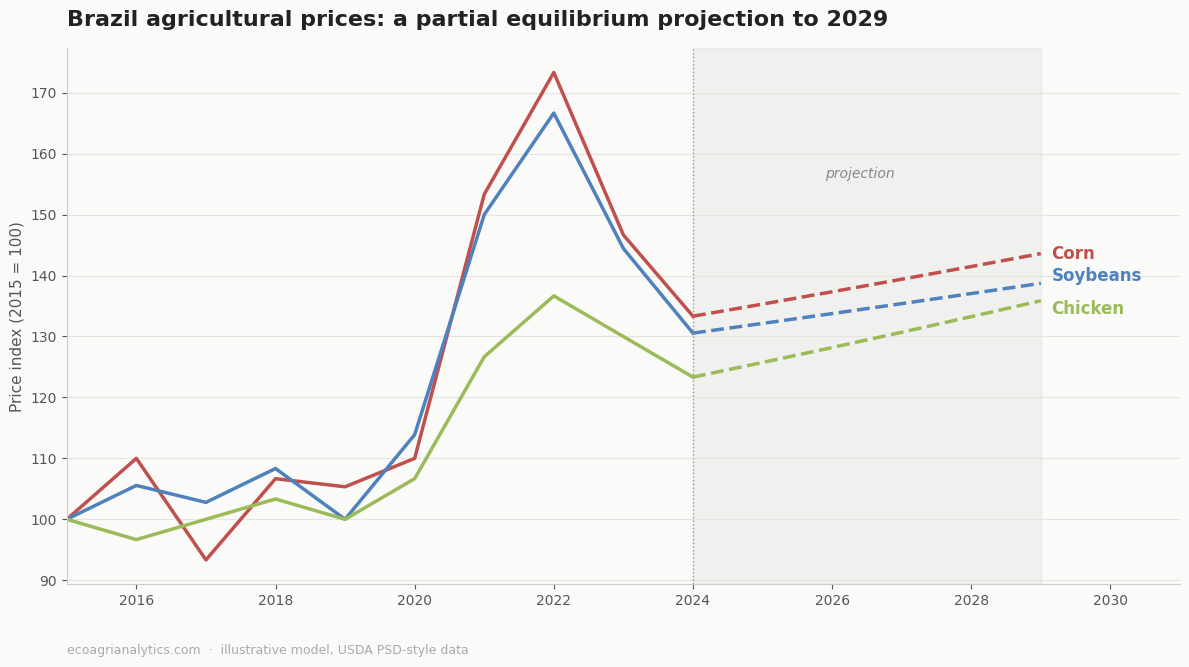
Long-term projections do not need to be complicated to be useful. I built a small partial equilibrium model for three linked Brazilian markets, corn, soy and broiler, and ran it five years forward. With export and domestic demand rising on the back of growing population and GDP, I expect upward potential across the board, with prices to 2029 climbing roughly 8 percent for corn, 6 percent for soy and 10 percent for chicken.
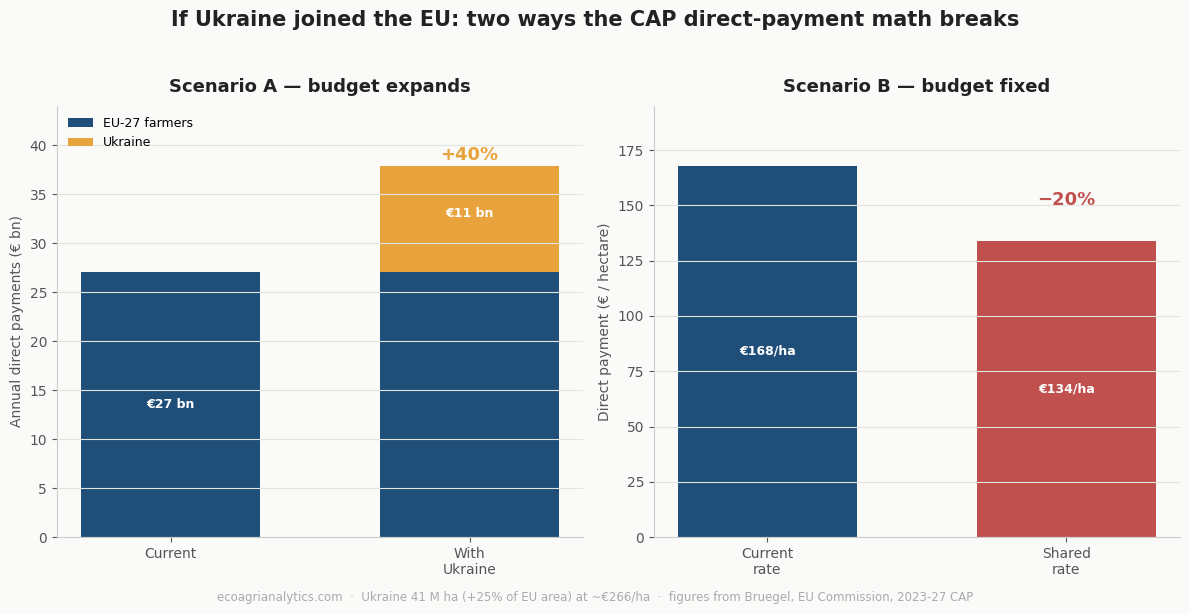
Ukraine farms 41 million ha, equal to a quarter of the EU's entire agricultural area. Because EU CAP payments are paid per ha, accession forces an awkward choice. Either the budget expands by roughly 40 percent to keep everyone's rate intact, or the budget stays fixed and payments to existing members fall about 20 percent. Neither is politically easy, nor accounted for in the newly proposed budget, which is a key reason accession remains distant.
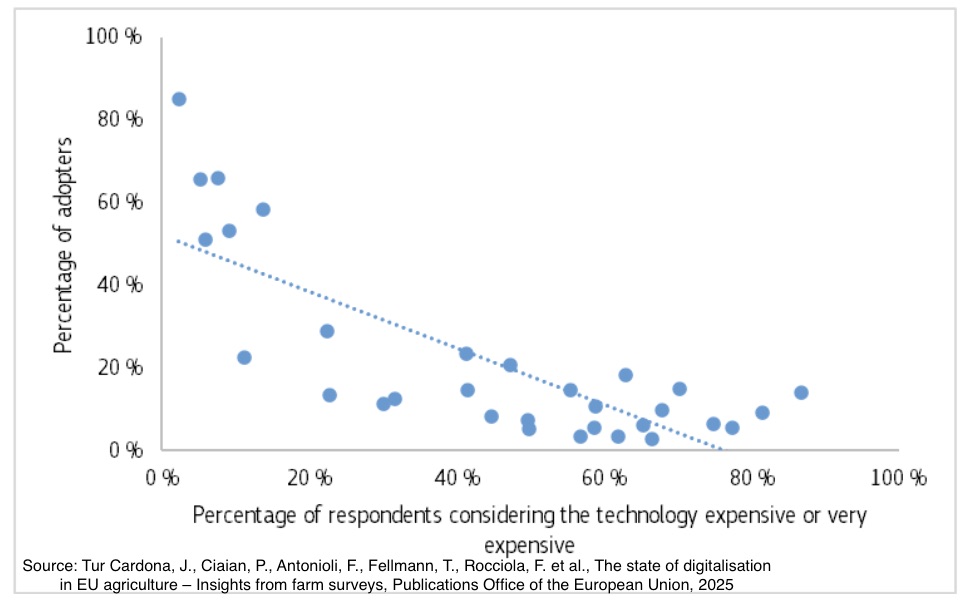
Recent survey data indicate that advanced digital livestock technologies are widely perceived as prohibitively expensive, constraining adoption rates. While farm management software is predominantly self-financed, capital‑intensive crop and livestock systems rely heavily on external funding sources. This asymmetry presents a clear opportunity for financial institutions to develop targeted credit and leasing products, accelerating the uptake of digital tools and narrowing the technological divide in European agriculture.
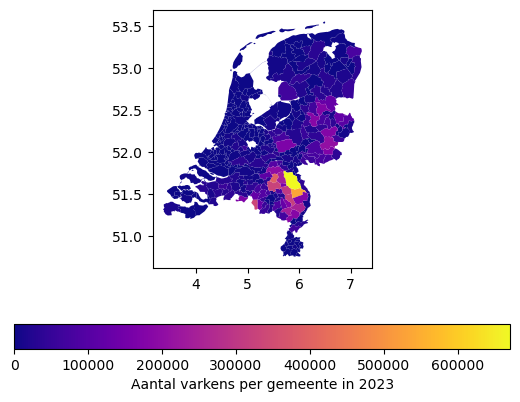
Mapping livestock density at the municipal level reveals a striking concentration of pig production. This spatial clustering underscores the economic specialization of the region and the structural exposure to regulatory, environmental, and market risks. For policymakers and investors alike, this highlights the importance of region‑specific strategies in managing sustainability and resilience within Dutch livestock production.
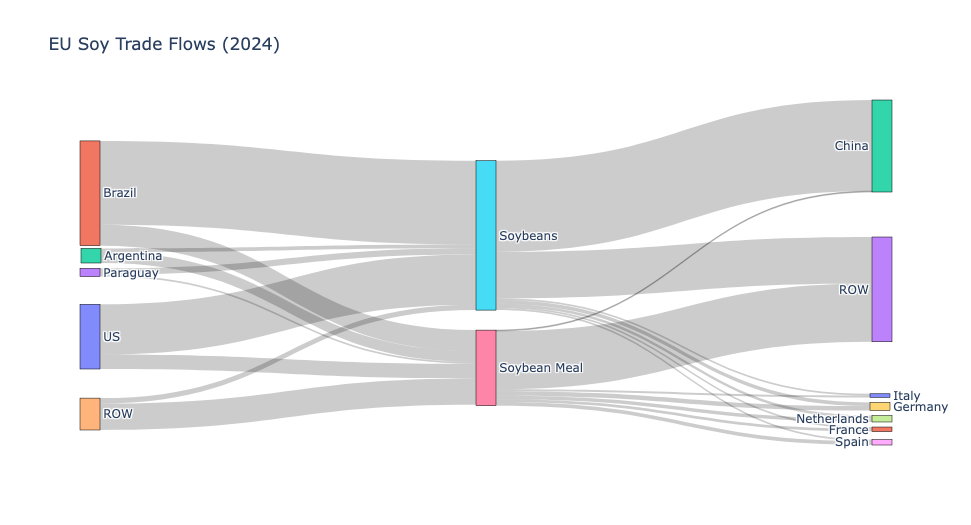
The diagram reveals Europe’s hidden role as shock absorber in global soy trade. This dependency undermines sustainability goals. Reliance on imported soy protein locks Europe into deforestation‑linked supply chains, challenging its climate and biodiversity commitments. Invest in and diversify protein sources to reduce systemic risk in EU feed chains.

Donec eget ex magna. Interdum et malesuada fames ac ante ipsum primis in faucibus. Pellentesque venenatis dolor imperdiet dolor mattis sagittis magna etiam.